
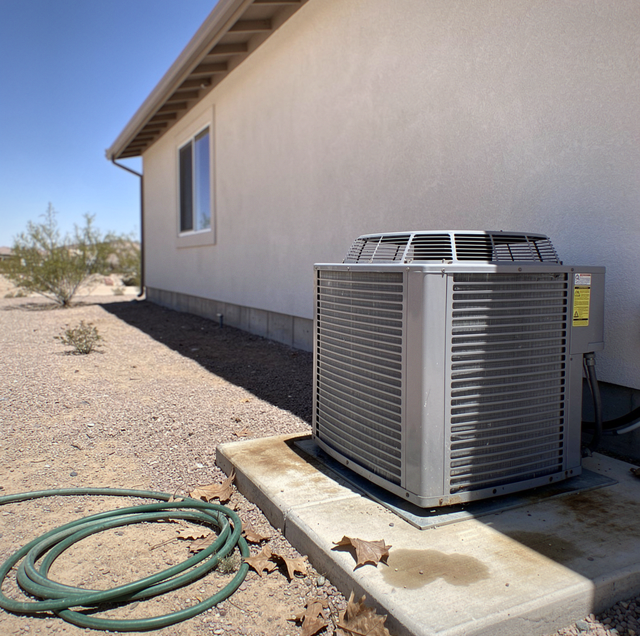
An air conditioner nearing the end of its working life raises a scheduling question: the system can be replaced on a date the homeowner picks, with room to compare equipment and plan around the work, or on the day it gives out, and the house is already warming up. Whether one more repair is worth it is its own decision, weighed apart from timing; the two paths to a new system, ahead of the failure or because of it, differ in what the household controls.
A planned replacement and one forced by a breakdown compare across sizing, equipment choice, ductwork and electrical checks, the house during the changeover, and the time there is to decide:
| What Changes | Planned Replacement | Replacement After a Failure |
|---|---|---|
| Sizing | A load calculation weighs the home's layout, insulation, and window exposure before equipment is ordered | The failed unit's tonnage becomes the starting point, with less room to ask whether it ever matched the house |
| Equipment choice | SEER2 tier, single- or multi-stage compressor, and heat pump versus straight-cool cooling are all open questions | Choices narrow to equipment that can be installed right away |
| Ductwork and electrical checks | Duct connections, insulation, and the breaker and wiring feeding the outdoor unit get reviewed before install day | These checks happen alongside the swap itself |
| The house during the changeover | The homeowner sets the day and can line up a portable cooling option in advance | Cooling is already down when the appointment gets booked, and the household manages without it until the crew arrives |
| How much time there is to decide | Room to compare equipment and weigh the options before committing | Compressed into whatever the household can spare before cooling has to come back |
What an Aging System Shows Before It Quits
An aging system gives signs before it quits, and reading those signs as a repair-or-replace question is a decision in itself. For timing, the signs matter for one reason: while the system is still running, the replacement date remains the household's to choose.
An outdoor-unit breaker that trips again after a reset is reacting to a fault on that circuit, and resetting it over and over risks arcing and fire at the unit. A licensed technician finds the fault with the power off.
A system old enough to run on an older refrigerant has its own path questions, weighed as a separate decision.
Equipment Choice When There Is Time
A scheduled replacement leaves room to compare equipment before anything is ordered. Sizing the new system starts with a load calculation weighed against the home's own layout and envelope, a subject of its own; the old unit's tonnage is where a rushed swap starts.
With that step in place, the open questions include an efficiency tier, a single-stage or multi-stage compressor, and a heat pump or a straight-cool system. On a breakdown day, the goal is getting cooling back, so the choice narrows to equipment that can go in right away.
The Ductwork and Electrical Checks a Rushed Swap Can Skip
New equipment doesn't operate in isolation from what's already in the walls and attic. Duct connections, insulation on exposed runs, and whether existing ductwork can move the air the new unit is rated for all affect how the system performs once it's running. The electrical side counts as well: the wiring and breaker feeding the outdoor disconnect must accommodate the new equipment. The refrigerant line set connecting the indoor and outdoor units belongs in the same review, since its line sizes must match the new unit's capacity, and a set that is the wrong size or damaged can be replaced as part of the job.
A planned replacement leaves room to walk through all of that before the install date, catch any problems, and fix them without adding pressure to the appointment. A same-day swap forced by a failure doesn't always have that room. Those checks either happen alongside the install, or they get deferred, and a system installed around an unresolved duct or electrical issue can underperform even though the equipment itself is new.
The House During the Changeover
Cooling goes offline for the work itself, no matter which path led to it; that part doesn't change with planning. When the indoor coil is replaced along with the outdoor unit, the job reaches equipment in two places, since on a split system that coil sits on the furnace or air handler. When the coil is replaced, its condensate drain line is reconnected to the drain pan that comes built into the new coil. What changes is who controls the timing. A homeowner replacing an aging system on their own schedule picks a day, can plan for people to be out of the house, and can line up a portable cooling option in advance for the time the house goes without air conditioning. A planned date also gives the household time to clear a path to the indoor equipment, whether it sits in an attic, a closet, or a garage, and to the outdoor unit. A household hit by an outright failure doesn't get that choice. Cooling is already down by the time anyone calls, and the house goes without it until the new system is in.
Either way, anyone in the house who's more vulnerable to heat- an infant, an older adult, someone managing a health condition- is better off somewhere cooler for the stretch the system is down rather than waiting it out at home.
When Waiting Is Reasonable
Not every aging system belongs on a replacement calendar just because it's getting older. A system that tested sound at its last service visit is a different case from one already showing a spreading pattern of failures. A single, isolated repair on a system that otherwise runs and cools evenly doesn't need to trigger a replacement conversation at all.
What tips the answer is whether the signs are isolated or accumulating, with the unit's age as one input. A system with one clean repair and no other complaints can reasonably wait for its next scheduled check before the question comes up again. One with different parts failing over recent seasons is a candidate for replacement before the next breakdown.
How the Timing Decision Gets Made
The decision comes down to weighing a few things together rather than picking one signal and stopping. How the system has been behaving, whether failures are isolated or spreading, counts alongside its age. How much disruption the household can absorb from cooling being offline matters too, since a family able to plan around time without air conditioning is in a different position than one that can't easily do without it. Whether there's appetite to compare equipment, efficiency tiers, and configuration options factors in as well, since a breakdown compresses that comparison into whatever time the household can spare. Whether a replacement needs a permit and an inspection is decided by the local building authority, and a planned date leaves room to fit that step around the install.
Taken together, those points decide whether a household plans a replacement ahead of the season or waits and watches for now; neither path is automatically the right one.
Frequently Asked Questions
Sometimes. A new outdoor unit carries its own minimum circuit ampacity and maximum overcurrent protection, and the technician matches the breaker and the wire feeding the disconnect to those ratings, regardless of what protected the old unit. A higher-capacity replacement may require a larger breaker and heavier wire, even when the same disconnect box stays.
A portable spot cooler or a window unit can stand in, and a larger window unit may require its own circuit, since sharing a circuit with other appliances can trip it, on top of losing the main system.
Among the readings a technician takes are the temperature drop across the indoor coil, set against the target for that equipment, and the compressor's amp draw, set against its rated load amps, with refrigerant pressures and capacitor readings alongside. A system inside those ranges at a service visit is a different case from one drifting toward their edges.
Not because of the urgency. Some equipment warranties require the new unit to be registered after installation, and that step is the same regardless of which path led to the swap; the registration records the new unit's model, serial number, and installation date.
Yes. A new unit's footprint doesn't always match the old one's, and a cracked, settled, or undersized pad becomes a stability and clearance problem once heavier or larger equipment sits on it, so the pad gets looked at whether the install was planned ahead or booked the same day the old system failed.
It can. Moving the unit means re-running the electrical whip and the refrigerant line set to the new spot, and keeping clear space around the coil for airflow and service access. That is extra work to scope, so it fits within a planned replacement when there is time to plan it.
Secure AC replacement with a heat-load calculation — sizing, ductwork, and electrical checks planned around a date the household sets. Modern Air Conditioning & Heating LLC serves Boulder City, Las Vegas, and Henderson. NV C-21 #0081442. Call (702) 919-4365.