
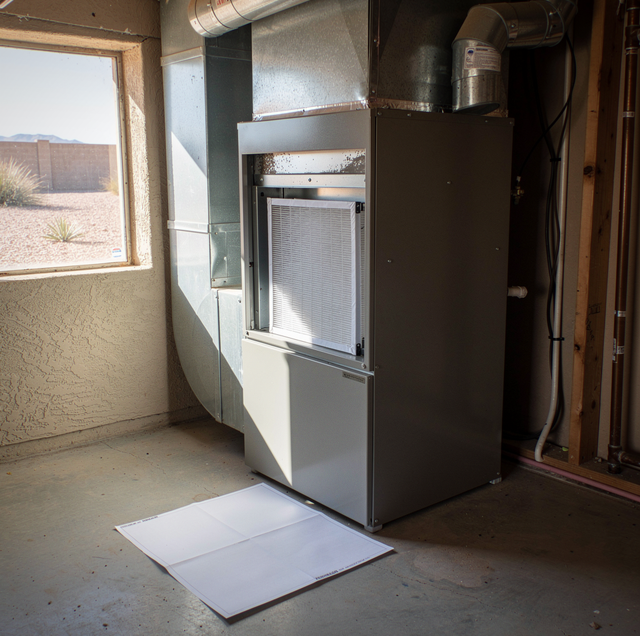
A furnace that keeps shutting off soon after it starts and relights within a few minutes is short-cycling. That is different from a furnace running less on a mild day. In normal operation, the burner lights, runs long enough to satisfy the thermostat, and then shuts off until the next call for heat. Short-cycling breaks that pattern by cutting the cycle short before it should end, then repeating the whole sequence within minutes. Central air conditioners can short-cycle for various reasons, but on the heating side of a gas furnace, short-cycling involves the burner, flame, and combustion gases rather than refrigerant.
Short-cycling matters beyond comfort. Every burner start draws extra electrical current through the igniter and inducer motor, and repeated stop-start cycles put more wear on the parts that manage ignition and airflow than steady runtime does. A furnace that short-cycles for weeks is also less efficient, since part of every cycle goes toward bringing the heat exchanger back up to temperature before it can deliver heat to the house.
The pattern the short-cycling takes narrows down which part of the system to test first:
| Pattern | Likely Cause |
|---|---|
| Shuts off after a few minutes with the house still cold | Restricted airflow tripping the high-limit switch |
| Shuts off with the blower still running | The high-limit switch cutting the burner while the blower keeps cooling the heat exchanger |
| Cycles more as a filter goes unchanged | Airflow degrading toward the same high-limit trip |
| Cycles only on the coldest nights | Marginal airflow reaching the high-limit only on the longest runs |
| Clicks off right after lighting | Flame not proven: a dirty or failing flame sensor, a poor ground, or a weak flame |
Overheating and the High-Limit Switch
One starting point for furnace short-cycling is overheating, which works through a specific part: the high-limit switch. It sits in the furnace's control system to protect the heat exchanger, sensing the air temperature inside the cabinet. If that temperature climbs past a safe point, it cuts power to the burner before anything gets damaged. That protection is doing its job correctly when it trips. Once the switch trips, it cuts power to the burner but not to the blower, which keeps running until the cabinet temperature drops back to a safe level and the switch resets. The question is why the furnace is overheating in the first place.
Restricted airflow causes it directly. A dirty air filter chokes the volume of air moving across the heat exchanger, so less cool return air arrives to carry heat away, and the cabinet temperature climbs faster than it should. The same thing happens gradually as a filter loads up over weeks, not all at once, which is why cycling can get worse before it becomes constant. A filter's resistance to airflow can climb before it looks gray or clogged, so a furnace can be starving for air even when it still passes a glance test. Airflow can also be blocked closer to the furnace itself, such as a return grille pushed against furniture, a return duct that has come loose or collapsed, or too few return grilles for the size of the system, which leaves the blower straining to pull enough air no matter how clean the filter is.
A cracked heat exchanger can also show up as short-cycling: once the blower starts, air can reach the burner through the crack, disturbing the flame, so the flame signal drops and the burner shuts off. This is not something to diagnose by opening the furnace and looking, both because a crack can sit inside the heat exchanger, where it cannot be seen from the burner, and because a compromised heat exchanger can let combustion gases mix into the air the blower distributes through the house.
A gas smell near the furnace means leave the house immediately and call for help from outside, not relight anything. A sounding carbon monoxide alarm means get everyone out right away. Leave the burner, sensor, and switch to a technician.
Flame Sensing and a Dirty Flame Sensor
A furnace that clicks off within seconds of lighting can be failing at flame sensing: residue on the sensor rod, a poor ground, or a weak flame keeps the control board from confirming the flame, so it shuts the gas valve and tries again. That is precise work on the burner's safety circuit, left to a repair visit.
Thermostat Placement and Wiring
Where a thermostat sits changes what it reads: a thermostat mounted near a supply vent, on an exterior wall, in direct sun through a window, or in a drafty spot close to a door reads temperature swings that diverge from the rest of the house, so it can satisfy or restart a call for heat out of step with what the living space needs. Loose or miswired low-voltage connections at the thermostat or the furnace's control board can send the same kind of inconsistent call for heat, separate from anything the thermostat's location is doing.
Resetting a tripped furnace clears the safety switch but does not fix why it tripped. If the burner shuts off again within a cycle or two after a reset, stop resetting it and call for a diagnostic instead.
An Oversized Furnace
Sometimes the furnace itself is too big for the house it is heating. A furnace sized well above the home's heat loss reaches the thermostat's setpoint quickly, shuts off, and then restarts soon after because the house cools back down between short bursts of heat rather than staying steady. That is one possibility among several, and it comes from how the furnace was sized and installed. The mismatch is between how much heat the burner delivers each minute and how long the house takes to absorb it, so an oversized furnace can pass every parts check on this list and still short-cycle.
What a Furnace Repair Visit Checks
A repair visit works through the same list in a set order. Airflow gets checked first, covering the filter, the return grilles, and duct connections near the furnace, since it is quick to rule out and sits behind the high-limit trip. The high-limit switch and the heat exchanger are tested next, because a switch that trips due to a genuine overheating problem needs the cause addressed, not just the switch itself. The flame sensor is tested, and the thermostat's placement and wiring are confirmed against the equipment's heat call. Venting gets a look too: a flue or vent pipe that is partly blocked keeps combustion gases from clearing, and the furnace's draft safety shuts the burner down, which short-cycles it from a different direction. Static pressure across the entire duct system, not just the filter, is part of that same airflow check, since an undersized duct system or one with several tight turns can hold air back even when the filter and returns are clear. Where none of those turn up an answer, the furnace's sizing is weighed against the ductwork it is paired with, and the gas pressure at the manifold is confirmed against what the equipment calls for, since low or uneven gas pressure can also unsettle how steadily a burner runs once it lights.
Frequently Asked Questions
It is mounted in the cabinet near the heat exchanger and, in some designs, on the supply plenum, where it can sense the cabinet air temperature at the point closest to the heat source. Because it sits inside the cabinet rather than out at the thermostat, a technician tests it with the panels open.
Yes. Setting the fan to run continuously keeps the blower moving air even between burner cycles, which can make a furnace that is cycling normally look like it never stops, while "Auto" cycles the fan with the burner and makes a real short-cycle easier to notice by sound alone.
It can, and on new equipment the cause lies in the setup. Gas pressure, static pressure, and control settings are confirmed at startup, and a new furnace that short-cycles goes back to its installer to recheck them, which is different from an established unit developing short-cycling later.
Yes. Shutting several registers at once reduces the total volume of air the system can move, and that drop can be enough to trip the high-limit switch even when the filter is clean and the return air path is clear, since the airflow problem is on the supply side instead.
A working sensor reads a steady microamp signal on a multimeter once the flame is lit. A sensor that reads below the equipment's working threshold gets cleaned or replaced and retested, since a weak but present reading can still fail intermittently later.
Only if the replacement is sized to the home's heat loss and the ductwork is checked against it. A smaller furnace moved into ductwork sized for the old, larger unit can leave airflow mismatched at the new equipment, which is its own separate problem to correct during the swap.
Hire furnace repair service — the visit starts at airflow and works through the limit switch, flame signal, and venting. Modern Air Conditioning & Heating LLC serves Boulder City, Las Vegas, and Henderson. NV C-21 #0081442. Call (702) 919-4365.