
What Makes an AC Compressor Fail in Extreme Heat?
Quick Answer: The compressor is the heart of an air conditioner, and extreme heat pushes it the hardest. Common causes of failure are low refrigerant, which makes the compressor overheat and run under stress; dirty coils and poor airflow that trap heat the system can't shed; electrical problems like a failing capacitor or hard-starting; and simple overwork as the unit runs nearly nonstop in punishing temperatures. Lack of maintenance ties most of these together. A compressor is often the most expensive part to replace, so protecting it with refrigerant checks, coil cleaning, and prompt attention to warning signs is far cheaper than letting it burn out.
In a brutal summer, your air conditioner's compressor is doing the heaviest lifting in the whole system — and it's also the part most likely to give out under that strain. Because the compressor is usually the costliest component to replace, understanding what causes it to fail in extreme heat is key to protecting it.
What the Compressor Does
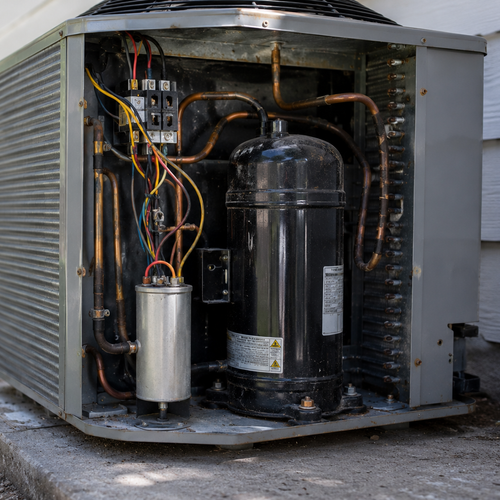
The compressor is the heart of the air conditioning system. It pumps refrigerant through the unit, compressing the gas and driving the cycle that absorbs heat from inside your home and releases it outside. Everything else depends on it working. When the compressor fails, the system can't cool at all, which is why a compressor failure in the middle of a heat wave is the worst-case scenario for an AC.
Extreme heat is hard on the compressor for a simple reason: the hotter it is outside, the harder the system has to work to move heat out of your home, and the longer and more intensely the compressor runs. Anything that adds stress on top of that heavy workload pushes it toward failure.
Cause One: Low Refrigerant
Low refrigerant, usually from a leak, is a leading cause of compressor trouble. The compressor is designed to pump a specific amount of refrigerant; when the level drops, it operates under abnormal pressures and works harder while providing less cooling. It also loses some of the cooling that the returning refrigerant normally provides to the compressor itself, so it runs hotter. Over time, that overheating and strain can burn the compressor out. This is why low refrigerant is never just a "top it off" issue — it stresses the most expensive part of the system.
Cause Two: Dirty Coils and Poor Airflow
An air conditioner sheds the heat it collects through the outdoor condenser coil. If that coil is caked with dust, dirt, or debris, it can't release heat efficiently, so heat builds up in the system, and the compressor runs hotter and harder. The same goes for restricted airflow from a dirty filter or blocked vents on the indoor side. In extreme heat, when the system is already struggling to dump heat into hot outdoor air, dirty coils can be the tipping point that overheats the compressor. Keeping the coils clean is one of the most protective things you can do.
Cause Three: Electrical Problems
The compressor relies on electrical components to start and run, and these are vulnerable in heat. The start and run capacitors, which give the compressor the jolt it needs to start and keep it running, can weaken or fail, especially under high-temperature stress. A failing capacitor forces the compressor to "hard start," drawing excess current and straining the motor windings. Electrical faults, loose connections, and voltage issues can all damage the compressor over time. Hard-starting under heat is a common path to compressor failure.
| Cause | What it does to the compressor |
|---|---|
| Low refrigerant | Overheats and runs under abnormal stress |
| Dirty condenser coil | Traps heat; compressor runs hotter |
| Restricted airflow | System can't shed heat; added strain |
| Failing capacitor | Hard-starting, excess current draw |
| Constant overwork | Little rest in extreme heat; wear adds up |
Cause Four: Overwork and Wear
Sometimes the cause is simply the relentless workload. In extreme heat, an AC may run almost continuously, with little downtime to let components rest and cool. A system that's undersized for the space, or one that's aging, feels this most. The constant running accelerates wear on the compressor and everything driving it. While some of this is unavoidable in a harsh climate, a well-maintained, properly sized, correctly charged system handles the heat far better than one that's neglected.
If your AC starts struggling in the heat — weak cooling, longer run times, or odd electrical clicking at startup — don't push it through the rest of the season hoping it holds. Those are exactly the stresses that kill compressors. Addressing them early often saves the most expensive part of the system.
Why Maintenance Is the Real Protection
Notice that most compressor-failure causes trace back to maintenance: refrigerant leaks caught early, coils kept clean, capacitors tested and replaced before they fail, and airflow kept clear. None of these is dramatic, but together they keep the compressor running within its limits even when it's brutally hot. Because replacing a compressor is one of the most expensive AC repairs there is — sometimes enough to make replacing the whole unit worth considering — the economics strongly favor prevention. A pre-season tune-up that checks refrigerant, cleans coils, and tests electrical components is cheap insurance for the heart of your system.
Frequently Asked Questions
Because extreme heat makes the compressor work harder and longer, and any added stress on top of that can push it to failure. Common triggers are low refrigerant causing overheating, dirty coils trapping heat, electrical problems like a failing capacitor, and simple overwork from running nearly nonstop. Lack of maintenance ties most of these causes together.
Yes. The compressor is designed to pump a specific refrigerant charge, and when the level is low, it operates under abnormal pressures, works harder, and loses some of the cooling the refrigerant normally provides. That makes it overheat, and over time, the strain can burn it out. Low refrigerant is a serious issue, not just a top-off.
The outdoor coil releases the heat your AC removes from the home. When it's dirty, it can't shed heat well, so heat builds up, and the compressor runs hotter and harder. In extreme heat, when the system already struggles to dump heat outside, dirty coils can be the final stress that overheats the compressor. Clean coils protect it.
Warning signs include weak or no cooling, the AC running much longer than usual, clicking or struggling sounds at startup (a hard-starting sign), tripping breakers, and the outdoor unit running hot. These often appear before total failure. Catching them early, especially during a heat wave, can save the compressor before it burns out.
It's typically one of the most expensive AC repairs, because the compressor is the central, costly component of the system. In some cases, the cost is high enough that replacing the entire unit becomes worth considering, especially on an older system. This is exactly why protecting the compressor through maintenance is so much cheaper than replacing it.
Maintenance is the key: keep the condenser coil clean, change filters and keep airflow clear, have refrigerant levels and leaks checked, and have electrical components like capacitors tested before the heat hits. A pre-season tune-up addresses all of these. Catching small problems early keeps the compressor running within its limits even in extreme heat.
Protect the Heart of Your System
The compressor works hardest exactly when the weather is harshest, and the things that make it fail in extreme heat — low refrigerant, dirty coils, electrical strain, and relentless overwork — almost all trace back to maintenance. Since the compressor is the priciest part to replace, keeping it cool, clean, properly charged, and electrically sound is the smartest investment you can make in your AC's survival through a brutal summer.
Want to keep your AC compressor alive through the heat — Get a tune-up that checks refrigerant, cleans coils, and tests the electricals. Modern Air Conditioning & Heating LLC serves Boulder City, Las Vegas, and Henderson. NV C-21 #0081442. Call (702) 919-4365.
