
AC Tune-Up Checklist: What a Technician Actually Does
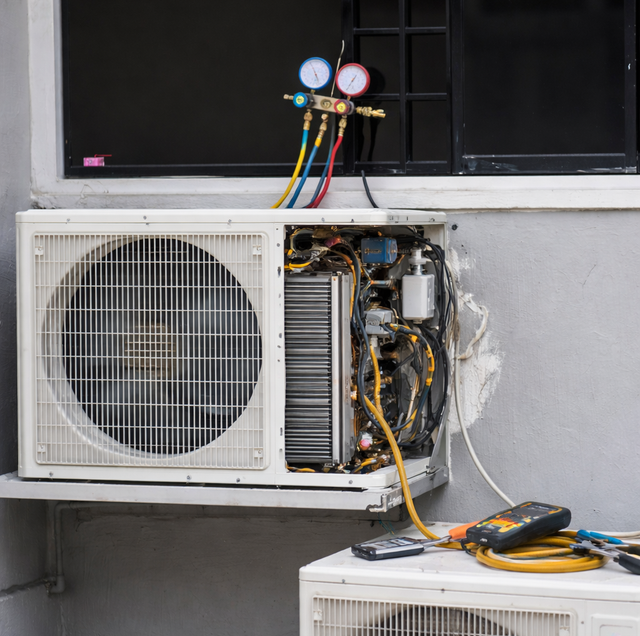
Quick Answer: A professional AC tune-up is a yearly inspection and service where a technician checks refrigerant charge, cleans the condenser and evaporator coils, tests the electrical components, measures the temperature split across the coil, clears the condensate drain, services the filter and blower, and verifies the thermostat. It catches small faults before they cause a failure and keeps the system running at its rated efficiency.
An air conditioner rarely fails all at once. It slides. A capacitor weakens, a coil films over with dust, a drain line starts to clog, and the system keeps running while quietly losing capacity and burning more power to move the same air. By the time the house stops cooling, the small problem that started it has usually taken something bigger down with it.
A tune-up is the annual appointment that catches those slides while they are still cheap. A technician measures the parts that drift out of spec, cleans the surfaces that lose heat transfer when they foul, and tightens or replaces the components that show early wear. The goal is not to make a healthy system feel new. It is to keep a working system inside its design range so it holds efficiency, moves the airflow it was sized for, and reaches the end of its expected life instead of dying years early.
Why A Tune-Up Is Worth The Appointment
The case for annual service comes down to three things that all move in the wrong direction on their own: efficiency, airflow, and equipment life.
Efficiency erodes silently: A refrigerant charge that reads a little low, a condenser coil packed with dust, or a capacitor that no longer holds its rating all make the system work harder for the same result. None of these announce themselves. The house still cools, the bill just creeps up, and the compressor runs longer cycles to compensate. A tune-up puts a gauge on the parts that drift so the drift gets corrected before it compounds.
Airflow is what carries the cooling: An air conditioner does not cool a room directly. It cools a coil, and the blower pushes house air across that coil. When the filter loads up, the blower wheel cakes with grime, or the evaporator coil films over, airflow drops and the whole system loses capacity. Low airflow also lets the coil run colder than intended, which can ice it over and push liquid refrigerant back toward the compressor. Restoring airflow is one of the highest-value things a tune-up does.
Equipment life depends on the small stuff: The compressor is the core component of the system, and it is the part that suffers most when everything upstream is neglected. A weak capacitor makes the compressor strain to start. A dirty condenser coil makes it run hot. A low charge makes it work without enough refrigerant, which also carries oil for lubrication. Fix those early, and the compressor stays inside the conditions it was built for.
Think of it the way a mechanic treats an oil change: the point is not the fresh oil, it is the ten minutes spent looking at everything else while the car is up on the lift. Most of the value of a tune-up is in the inspection, not any single task on the list.
A tune-up is professional work. Capacitors store a charge even after the power is off, and the disconnect that feeds the outdoor unit carries lethal voltage. The electrical compartment is one homeowners should never open, because it stays live in ways that are not obvious.
Refrigerant Charge And Pressures: The technician connects gauges to the system and reads the high-side and low-side pressures while it runs, comparing them against the temperatures at the coil. A low charge points to a leak that needs finding, not just topping off. An overcharge is just as harmful and gets corrected down. Correct charge is the single biggest lever on both cooling capacity and the compressor's working conditions.
Condenser and Evaporator Coils: Both coils are heat exchangers, and both lose their ability to move heat when they foul. The outdoor condenser coil collects dust, grass, and airborne grit; the indoor evaporator coil films with a mix of dust and moisture. The technician cleans them so heat actually transfers instead of being trapped by an insulating layer of buildup.
Capacitor and Contactor: The capacitor gives the compressor and fan motors the jolt they need to start and helps them run smoothly. It weakens with age and heat, and a weak one strains the motor long before it fails outright. The technician tests it against its rated microfarad value and replaces it if it has drifted. The contactor, the switch that sends power to the outdoor unit, gets checked for pitted or burned contacts that cause hard starts.
Wiring And The Disconnect: Loose connections generate heat, and heat degrades terminals until they fail. The technician inspects wiring for scorching, corrosion, and loose lugs, and confirms the disconnect at the outdoor unit is sound. This is the compartment homeowners should never open, because it stays live in ways that are not obvious.
Temperature Split Across The Coil: With the system running, the technician measures the temperature of the air entering the return and the air leaving the supply. The difference, called the temperature split, should land in a normal band for a properly charged system with good airflow. A split that reads too narrow or too wide is a fast diagnostic clue that points toward a charge problem, an airflow restriction, or a coil issue.
Condensate Drain Line: Cooling pulls moisture out of the air, and that water has to drain away. Over a season, the line grows algae and sludge that can block it, back the water up into the pan, and trip the safety switch or overflow onto whatever is below. The technician clears the line and confirms it flows freely.
Filter, Blower Motor, and Fan: The filter gets checked and replaced when loaded. The blower motor and wheel get inspected for grime buildup that unbalances the fan and chokes airflow, and older motors with oil ports get lubricated. The outdoor fan is checked for smooth, quiet operation and secure blades. This is the airflow chain, and every link in it affects capacity.
Thermostat Calibration And Wear: The technician verifies the thermostat reads accurately and actually calls for cooling and staging as it should. A thermostat that reads two degrees off makes the whole system run to the wrong target. Finally, the tech looks over the system as a whole for the early wear that does not fit any single test: fraying insulation, a fan blade with play, a mount working loose, rust starting at a seam.
How A Tune-Up Changes The Way The System Runs
The difference shows up in ways an owner can feel. A system that holds its charge and clean coils cools the house in shorter cycles and holds temperature more evenly, so rooms stop drifting warm in the afternoon. Corrected airflow means the supply registers actually push cool air instead of a weak trickle. And the failures that strand a household without cooling- a seized compressor, an iced coil, a flooded drain pan- are exactly the ones a tune-up is built to head off before they happen.
None of this makes an air conditioner immortal. It keeps the equipment operating inside the range it was engineered for, which is what lets it reach a full service life instead of aging in fast-forward.
How Often A Tune-Up Should Happen: Once a year is the standard, and it is a year-round need rather than a summer errand. Cooling season is the obvious stress test, but the same components sit through heating months and the shoulder seasons too, and dust, wear, and slow refrigerant loss do not pause between summers. A system that also provides heat benefits from a matching check on the heating side, so many owners schedule two visits a year.
Book service in the calmer stretch of the year, before the heaviest cooling demand arrives, so small faults get caught before the system is asked to run flat out.
Frequently Asked Questions
You can handle the low-voltage, no-tool parts safely: swap the filter on the schedule its packaging lists, rinse loose debris and cut back plants to keep at least two feet of clearance around the outdoor unit, and confirm the thermostat has fresh batteries and a clean schedule. Everything involving refrigerant lines or the electrical compartment requires a certified technician and is a code and safety line homeowners should not cross.
A single cooling system usually takes about an hour to an hour and a half for a thorough visit, longer if the technician finds a repair to make or a coil that needs a deep cleaning rather than a light one. Homes with two systems, or a heat pump that gets both its cooling and heating sides serviced in one trip, run longer. A visit that wraps in fifteen minutes rarely covers the full checklist.
It can recover efficiency the system has already lost, which is different from making it more efficient than new. Industry figures often cite a dirty condenser coil alone as capable of raising energy use by a noticeable margin, and a low charge compounds it. The savings come from returning the equipment to its rated performance, so the effect is largest on a system that has gone several seasons without service.
Yes, and skipping them can affect the warranty. Many manufacturers require records of annual professional maintenance as a condition of honoring their parts warranty, so a compressor claim can be denied if there is no service record. Newer equipment drifts out of spec more slowly than older equipment, but capacitors, drain lines, and refrigerant charge still need the same yearly verification.
A tune-up is scheduled, preventive, and priced as a routine service that assumes the system is basically working. A repair replaces a part that has already failed or is actively failing. The two overlap when a tune-up uncovers a problem: the inspection is the tune-up, but replacing a burned contactor or fixing a refrigerant leak found during it is repair work quoted separately.
The faults stack. A slow refrigerant leak keeps dropping the charge, coils keep fouling, and a marginal capacitor finally gives out, and because these compound, the compressor runs hotter and harder the whole time. The common endpoint is a peak-season failure of a critical component that a fifteen-minute test would have flagged two seasons earlier while it was still a minor part.
Book your annual AC tune-up before peak cooling season — protect efficiency, airflow, and the life of your system. Modern Air Conditioning & Heating LLC serves Boulder City, Las Vegas, and Henderson. NV C-21 #0081442. Call (702) 919-4365.
