
Oversized AC Problems: Why Bigger Cooling Backfires
Quick Answer: An oversized AC cools the air faster than it can pull moisture out of it. The thermostat is satisfied and shuts the system off within a few minutes, before the coil has removed enough humidity. That short, repeated on-off pattern leaves the home cold but clammy, strains the compressor, and wastes energy.
A cooling system that seems too powerful sounds like a good problem to have. It is not. When an air conditioner is larger than the home actually needs, it cools the air so quickly that it never finishes the second half of its job, and the result is a house that feels cold and damp at the same time, with equipment that wears out faster and a power bill that keeps creeping up.
If your rooms cool off in a rush and then feel sticky within the hour, the size of the unit deserves a closer look before anything else.
Why Run Time Matters More Than Raw Power
An air conditioner does two separate things every time it runs. It lowers the air temperature, which is the part you feel first, and it removes moisture from that air, which is the part you only notice when it is missing. Removing heat you can measure on a thermostat is called sensible cooling. Pulling water out of the air is latent cooling, and it takes time.
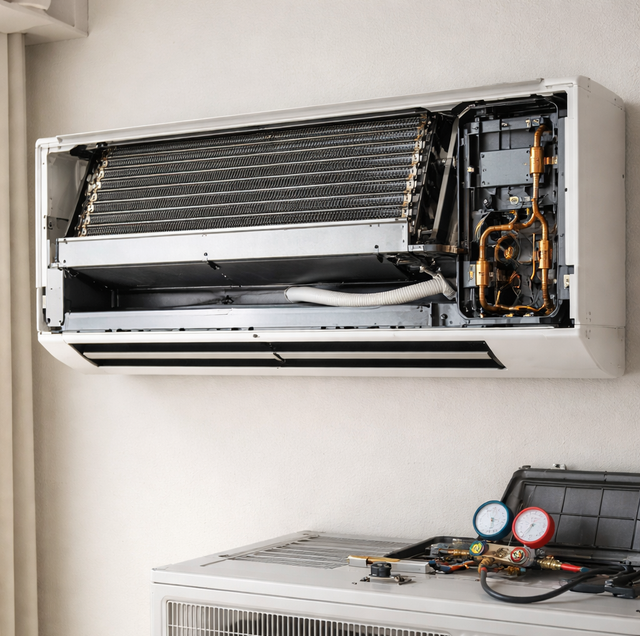
Here is where run time comes in. Moisture removal happens at the indoor evaporator coil. Warm household air passes over the cold coil, water vapor condenses on the fins the way it beads on a cold drink, and that liquid drips into a pan and drains away. The coil has to stay cold and keep pulling air across it long enough for a meaningful amount of water to collect and drain. A short burst does not get there.
A correctly sized system runs in long, steady cycles on a warm day, often 15 minutes or more at a stretch. Those long cycles give the coil the time it needs to wring humidity out of the whole house. An oversized system does the temperature part almost instantly, trips the thermostat, and stops, so the latent side of the job barely begins.
Why an Oversized Unit Short-Cycles
Short-cycling is the term for an AC that turns on, runs briefly, shuts off, and repeats far too often. With an oversized unit, the cause is simple. The system has more cooling capacity than the space requires, so it drives the air temperature down to the thermostat setpoint in just a few minutes.
The thermostat measures temperature, not moisture. Once the air near it hits the target, it signals the system to stop, and it has no way to know the air is still heavy with humidity. The compressor shuts down. A little while later, the temperature drifts back up, the thermostat calls for cooling again, and the cycle restarts.
A right-sized unit avoids this because its capacity roughly matches the heat the home is gaining, so it runs and runs while it slowly wins the race, rather than sprinting and quitting. The mismatch, not a broken part, is what drives the constant stopping and starting.
The Comfort Problems You Actually Feel
The most common complaint with an oversized system is a home that is cold and clammy. Because the unit never runs long enough to dehumidify, indoor humidity stays high even while the thermometer reads a comfortable number. Damp air at 74 degrees feels worse than drier air at the same reading, and it can leave skin sticky, encourage a musty smell, and give mold a friendlier place to grow.
Uneven temperatures are the second issue. Long, steady cycles are what move conditioned air to the far corners and back rooms of a house. When cycles are short, rooms near the equipment chill down while distant rooms never catch up, so the home cools in patches instead of evenly.
Cold blasts are the third. An oversized unit dumps a large volume of cold air in a short time, which can feel like a draft near the vents, then leaves long gaps with no airflow at all. Instead of the gentle, continuous conditioning a matched system gives, you get a swing between chilly gusts and stagnant stretches.
The Efficiency and Wear Problems Behind the Wall
The damage you do not see is happening at the compressor. The hardest moment in any cooling cycle is startup, when the compressor motor draws a heavy surge of current to get moving. A system that starts many extra times per hour racks up far more of those high-strain moments than one that settles into long runs.
Higher bills: Those repeated startups pull energy without delivering much cooling in return, and a system that cannot dehumidify makes the house feel warmer than the thermostat reads, which tempts you to lower the setpoint and run it even more. Both push the bill up.
Shorter equipment life: Frequent cycling wears the compressor, the contactor that switches it on, and the start components, so the most critical part of the system ages faster than it should. An oversized unit can reach the end of its service life years earlier than a correctly matched one, which erases any perceived benefit of buying bigger.
Extra strain on other parts: The blower motor, capacitor, and controls all cycle along with the compressor, so the whole assembly takes on more wear from the same stop-start pattern rather than the compressor alone.
How Proper Sizing Actually Works
Correct sizing is not a guess, and it is not a rule of thumb about square footage. The professional method is a Manual J load calculation, an industry-standard process that adds up how much heat a specific home gains and loses.
A Manual J accounts for the details that determine real cooling need: the home's square footage and ceiling heights, the amount and orientation of window glass, insulation levels in walls and attic, how tightly the house is sealed against air leaks, the number of people who typically occupy it, and heat from appliances and lighting. Two houses of identical size can need noticeably different capacity once those factors are weighed.
Two shortcuts cause most oversizing. The first is sizing by floor area alone, which ignores insulation, windows, and sealing entirely. The second is simply matching the tonnage of the old unit, which assumes the previous system was sized right in the first place, and very often it was not. Replacing an oversized unit with one just as large repeats the original mistake.
Because the calculation drives which equipment gets installed, and because handling refrigerant and high-voltage wiring is licensed work, sizing and installation belong with a qualified contractor. As a homeowner, the most useful thing you can do is note the symptoms and ask that a load calculation be run before any replacement is quoted, rather than accepting a like-for-like swap.
As a homeowner, note the symptoms and ask that a Manual J load calculation be run before any replacement is quoted, rather than accepting a like-for-like swap.
Signs Your AC May Be Oversized
A few patterns point toward a unit that is too large for the home:
- Rooms cool down very fast, then feel humid or sticky within an hour.
- The system turns on and off frequently, with each run lasting only a few minutes.
- The air feels cold near the vents, but the house still feels damp overall.
- Some rooms are cold while others never quite catch up.
- Bills are higher than expected even though the unit "seems" to be working hard.
- The equipment feels like it is constantly kicking on and off rather than running steadily.
Any one of these can have other causes, so they are a reason to have the system evaluated, not a diagnosis on their own. A technician can watch cycle times and check indoor humidity to confirm whether capacity is the real culprit.
Why Bigger Is Not Better
The instinct to buy the largest system available comes from thinking of an AC like a bigger engine that gets the job done faster. Cooling does not reward speed. It rewards steady run time, because the moisture removal that makes a home feel comfortable only happens while the system keeps running.
A unit matched to the home's actual load runs longer on each cycle, holds humidity down, spreads cool air evenly, starts far less often, and lasts longer. An oversized unit does the opposite on every count. The goal is not maximum capacity; it is the right capacity for your specific house, and the only reliable way to find that number is a load calculation done before the equipment is chosen.
Frequently Asked Questions
A well-matched, well-running system generally keeps indoor relative humidity in the range of 40 to 50 percent during cooling season. Above roughly 55 to 60 percent, air starts to feel clammy and mold risk rises. An inexpensive hygrometer placed away from vents lets you check the reading yourself and gives a technician a useful data point.
Yes. When humid indoor air stays high because the system short-cycles, condensation can form on cold supply ducts and registers, especially in unconditioned attics or crawlspaces. Over time, that moisture stains ceilings and can dampen insulation, a symptom people often blame on a roof leak rather than on cooling that never dehumidifies.
Partly. A variable-speed or two-stage compressor can run at a lower output for longer, which helps a slightly large unit behave more like a right-sized one. It is not a license to oversize on purpose, though. The equipment still has to be selected from a proper load calculation, and a badly oversized variable-speed unit can still fall short on dehumidification.
It causes a related set. An oversized furnace heats to the thermostat setpoint fast and shuts off, so it short-cycles much like an oversized AC, which leaves warm and cool spots and wears the ignition and blower. Heating does not involve dehumidification, so the clammy issue is unique to cooling, but the cycling wear and uneven comfort carry over.
Cooling capacity is measured in BTUs per hour, and one ton of cooling equals 12,000 BTUs per hour. Residential systems are commonly sized between about 1.5 and 5 tons. The tonnage on a nameplate tells you the unit's capacity but says nothing about whether that figure matches your home, which is exactly what a load calculation determines.
It will feel different, not weaker. A correctly sized replacement runs longer and cools less explosively, so you lose the immediate blast of cold air. In exchange, you get steadier temperatures room to room and noticeably lower humidity, which most people find more comfortable once they adjust to air that arrives gradually instead of in bursts.
Ask for a Manual J load calculation before your next AC replacement — right-sized cooling means steadier comfort, lower bills, and equipment that lasts. Modern Air Conditioning & Heating LLC serves Boulder City, Las Vegas, and Henderson. NV C-21 #0081442. Call (702) 919-4365.
