
Why Won't My AC Turn On? 6 Reasons to Rule Out First
You walk to the thermostat, lower it, and wait for the familiar hum from outside. Nothing. No fan, no click, no cold air. An air conditioner that stays completely dead is not one problem with one cause. It is a symptom that somewhere in the chain that carries power to the unit, sends the "cool now" signal, and protects the system from damage, one link has broken. Find the broken link, and the system usually comes back.
Quick Answer: A dead AC almost always means a break in one of three chains: power (a tripped breaker, blown fuse, or pulled disconnect), control (a thermostat with dead batteries or wrong settings), or safety (a float switch that shut the system down because the drain pan is full). Homeowners can safely check the thermostat, breakers, condensate drain, air filter, and outdoor disconnect. If nothing runs after that, or if a breaker trips again, the fault is inside an energized or sealed part of the system and needs a technician.
How Power, Control, and Safety Reach Your AC
Your cooling system only runs when three separate things line up. First, line-voltage power has to reach both the indoor and outdoor equipment. Second, the low-voltage control signal from the thermostat has to travel through the wiring to the control board and tell the system to start. Third, none of the built-in safety devices can be tripped. If any one of those is interrupted, the whole system falls silent, and to the thermostat it can look identical whether the cause is a dead battery or a failed part deep inside the unit.
A relay race makes the point: the baton has to be passed cleanly from runner to runner. Power hands off to the control signal, which passes through every safety switch, and only then do the compressor and fan get the go-ahead. Drop the baton anywhere along that route, and the race never finishes. Diagnosing a dead AC is really just walking that route and finding where the baton fell.
The single most useful question to answer before touching anything: Is the system totally dead, or does it have power but refuse to start? A blank thermostat, no lights anywhere, and silence usually point to the power or control chain, or a tripped safety. A lit thermostat that calls for cool while nothing spins usually points to a start component. That one distinction sends you down two very different paths, and it is worth pausing to notice which one you are on.
This is a year-round fault, not a summer-only one. Sustained high heat piles extra load on the compressor and can push a weak capacitor or contactor over the edge on a hot afternoon, but the same parts fail in mild weather too, and drain clogs, dead batteries, and tripped breakers happen in any month. Heat is one stressor among several, never the whole explanation.
The Homeowner-Safe Checks, In Order
These are the checks you can do without opening anything energized. Work through them in order, because they run from the most common and simplest to the least.
Start at the thermostat- The thermostat is the brain, and a dead brain sends no signal. If the screen is blank, replace the batteries before assuming anything worse. Confirm the mode is set to "cool," not "off," "heat," or "fan only," and that the target temperature is set at least a few degrees below the current room temperature so the system actually has a reason to call for cooling. A thermostat bumped to the wrong mode or a set point above room temperature will leave a perfectly healthy AC sitting idle.
Check the breakers and fuses- A central AC is often fed by two circuits, not one: a breaker for the indoor air handler and a separate breaker for the outdoor condenser. Open the electrical panel and look for a breaker that has snapped to the middle or "off" position. Reset it firmly to "on" one time. Some systems also use a fuse or disconnect fuses that can blow. If resetting restores the system, note it and watch closely. If the breaker trips again, stop, because that is telling you something specific covered further down.
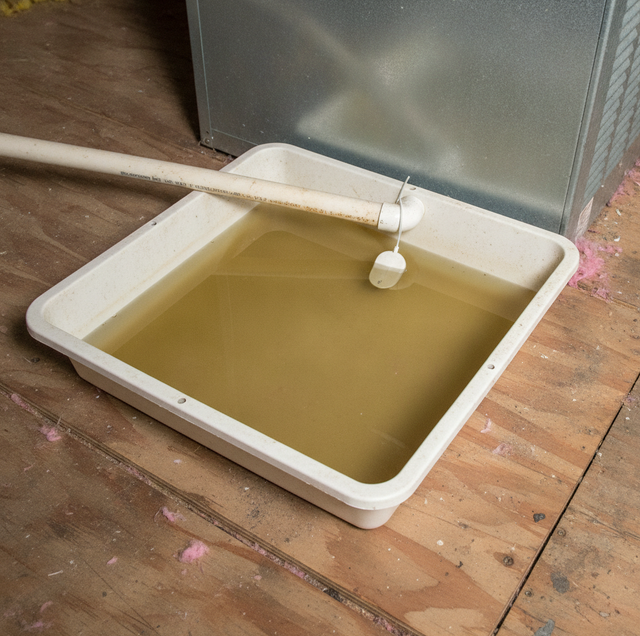
Look at the condensate safety switch- This one surprises a lot of homeowners. As your AC runs, it pulls moisture from the air, and that water drains through a line and into a pan. When the drain line clogs and the pan fills, a float or safety switch senses the rising water and deliberately shuts the whole system off so the overflow does not spill onto a ceiling or into an air handler. The system looks dead, but nothing is broken. Clearing the clogged drain line, often by removing the standing water and flushing the line, resets the float and brings the system back.
Replace a clogged air filter- A filter caked with dust chokes airflow across the indoor coil. Starved of air, that coil can drop below freezing, ice over, and trigger a protective shutdown that keeps the system off until it thaws. A filter that has not been changed in months is a common lead-up to a "won't turn on" call. Swap it for a clean one, and if the coil has frozen, give it time to thaw fully before expecting normal operation.
Confirm the outdoor disconnect is in- Near the outdoor condenser, usually in a small box mounted on the wall, sits a pull-out disconnect switch. Technicians and anyone doing yard work pull the plug to cut power to the unit for safety. If it was pulled and never fully pushed back in, the condenser stays completely dead even while the thermostat glows and the indoor blower runs. Check that the disconnect is seated firmly in its "on" position.
When the Problem Is Deeper Than a Reset
If you have confirmed the thermostat has power and is set correctly, both breakers are on, the drain is clear, the filter is fresh, and the disconnect is in, and the system still will not run, the fault has moved past the homeowner-safe zone. Here, the distinction you noted earlier does the heavy lifting.
If there is no power at all, the culprit is usually upstream: a breaker that keeps tripping, a failed low-voltage fuse on the control board, a bad control board, damaged thermostat wiring, or a failed low-voltage control power supply that steps line voltage down to the 24 volts the controls run on. Without that low voltage, the thermostat may go dark, and no relay can close.
If instead the thermostat is lit and calling for cool, but the motors sit silent, the likely suspects are start components. A capacitor stores and releases the jolt of energy a compressor or fan motor needs to start turning, and when it weakens or fails, the motor hums or does nothing at all. A contactor is the heavy-duty switch that actually connects power to the compressor and outdoor fan when the thermostat calls, and burned or stuck contacts can leave the outdoor unit dead, even when the signal arrives. A tripped high-pressure safety switch can also lock the system out until the underlying cause is found.
All of these live inside energized cabinets or the sealed refrigerant system. A capacitor can hold a dangerous charge even with the power off. Contactors, control power supplies, control boards, and anything that touches refrigerant are technicians' territory, tested with proper meters, and replaced with the right-rated parts. This is the line between a safe reset and a repair that needs training and tools.
The One Warning Sign You Should Never Push Past
A breaker trips for a reason: it senses more current flowing than the circuit is rated to carry, and it cuts power to prevent overheating and fire. Resetting it once is reasonable because breakers can trip from a momentary surge. But if it trips right back after that single reset, a real fault is drawing too much current, often a shorted compressor, a failing motor, or damaged wiring. Repeatedly forcing the breaker back on does not fix anything and can overheat the wiring or worsen the underlying failure. One reset, then stop and call a professional. That single habit prevents the largest share of the serious, avoidable damage we see.
Walking the chain in order, thermostat, breakers, drain, filter, disconnect, resolves a surprising number of dead-AC calls without anyone opening a panel. When it does not, you will at least know whether you are dealing with a power problem or a start problem, which turns a vague "it won't turn on" into a specific starting point for the technician.
Frequently Asked Questions
The thermostat, because it is the part a homeowner can inspect that most often explains a complete no-start. Before it quits, most units warn you: watch for a low-battery icon or a screen that has gone blank. Many thermostats take two AA or AAA cells behind the faceplate, while slimmer smart models run on a single CR2032 coin cell, so match the replacement to what your unit actually uses. Fit fresh batteries, set the mode to "cool," and drop the target a few degrees below room temperature.
A built-in safety switch does it on purpose to prevent water damage. That switch is usually a small float sitting in the secondary drain pan under the air handler, or a wet switch spliced into the primary condensate line, and rising water lifts it and cuts power. To clear the clog behind it, pour a cup of white vinegar into the drain line access tee to break down the algae slime blocking it. Then let it drain; once the water level drops, the float settles, and the system runs again.
Yes. The indoor air handler and the outdoor condenser are frequently wired to separate circuits with their own breakers. That design means you can end up with partial power, for example, the indoor blower runs and the thermostat lights up, while the outdoor unit stays dead because only its breaker tripped. Both breakers have to be on for the full system to run, so when you check the panel, look for and reset each one rather than assuming a single switch controls the whole unit.
It is a pull-out block that lives in a small box within a few feet of the outdoor condenser, and pulling it lets anyone cut power to the unit without going to the main panel. The detail that trips people up is orientation: the block only makes contact when it is pushed fully in and seated the right way around, so a block that was reinserted upside down or left standing proud looks in but carries no power. Push it firmly home in the correct orientation, and the condenser wakes up.
The signal is arriving, but the motors will not spin, which points to a failed start component, most often the run capacitor. A quick visual tell is the top of the capacitor: a healthy one is flat, while a failing one often bulges or domes upward as it swells. Do not open the cabinet to poke at it, though, because a capacitor can hold a dangerous charge even after the power is off, so it has to be safely discharged and swapped by a technician with a meter.
No. First, know how to reset one correctly: a tripped breaker usually sits in the middle, neither full on nor off, and it will not re-engage until you push it firmly all the way off and then back on if it holds, fine. But a breaker that trips again after that is not a nuisance; it is signaling a real fault, often a shorted compressor, a failing motor, or damaged wiring, and forcing it back repeatedly only risks the circuit. One reset, then leave it off and call a professional.
Book a diagnostic visit today — get your system back to cooling without guesswork. Modern Air Conditioning & Heating LLC serves Boulder City, Las Vegas, and Henderson. NV C-21 #0081442. Call (702) 919-4365.
