
Frozen Evaporator Coil in Summer: Causes and What to Do
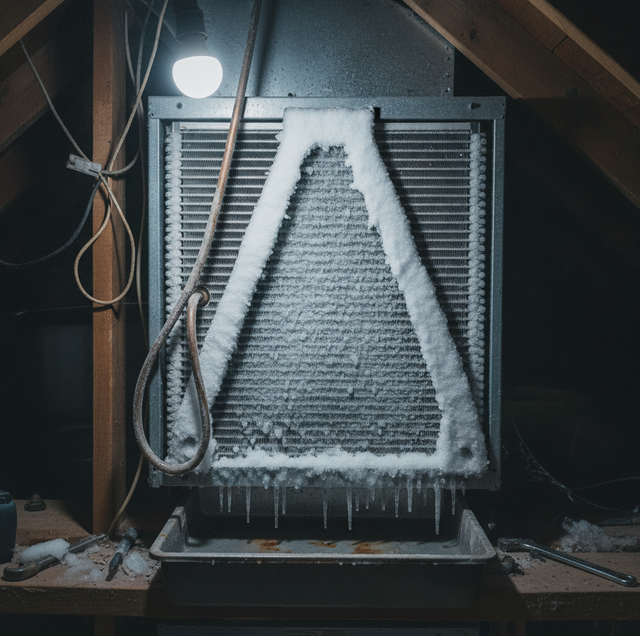
It is the hottest week of the year, your air conditioner is running nonstop, and the air coming out of the vents is barely cool. You go look at the system and find the last thing you would expect in this heat: ice, a coil, or a line coated in frost like something out of a freezer. A frozen evaporator coil is a strange sight in summer, but it is a common one, and what you do in the next few minutes matters.
The freeze is a symptom, not the disease, and running the system while it is iced up can do real damage. Here is what to do and why it happened.
Do This First
If you find ice on the indoor coil or the refrigerant line, act before you troubleshoot:
- Turn the cooling off at the thermostat. Do not keep running it, because operating a frozen system can damage the compressor, the most expensive part to replace.
- Switch the fan to "on." Running the blower without cooling pushes warm household air over the coil and thaws the ice faster.
- Give it time to fully thaw, which can take a few hours. Do not chip at the ice.
- Check and replace the air filter if it is dirty, since that is the most common cause.
- Once fully thawed and dry, you can try cooling again, but if it freezes back up, leave it off and call for service.
Never run an air conditioner while the coil is frozen, and never chip or scrape the ice off. Running a frozen system can burn out the compressor, and chipping at the coil can puncture it, releasing refrigerant. Turn the cooling off, let it thaw on its own with the fan running, and address the cause before running it again.
Why a Coil Freezes When It's Hot Out
It may seem backward for a coil to freeze during a heat wave, but the mechanism is simple. The evaporator coil is cold by design; that is how it pulls heat out of your air. It stays above freezing only because a steady flow of warm household air constantly passes over it. Take away enough of that warm airflow, and the coil keeps getting colder with nothing to warm it, until the moisture on it freezes and the ice snowballs. So almost every frozen coil traces back to one of two things: not enough warm air reaching the coil, or a refrigerant problem making the coil colder than it should be.
The Usual Causes
Restricted airflow is the leading cause, and a dirty air filter is the single most common culprit, because a clogged filter chokes off the warm return air the coil needs. Blocked or closed supply and return vents, a dirty coil, and a weak or failing blower fan do the same thing by starving the coil of airflow. The second category is refrigerant: a low charge from a leak lowers the pressure in the coil and drops its temperature below freezing, so it ices up even with decent airflow. A clogged condensate drain can contribute to it, backing moisture up around the coil. Sorting airflow problems from refrigerant problems is what a technician does, but you can rule out the easy one, the filter, yourself.
| What you notice | Likely cause |
|---|---|
| Ice on coil, very dirty filter | Restricted airflow from a clogged filter |
| Ice plus weak airflow from vents | Blocked vents, dirty coil, or weak blower |
| Ice with a recent drop in cooling | Low refrigerant from a leak |
| Freezes again right after thawing | Refrigerant or airflow issue needs a pro |
Why Extreme Heat Makes It Worse
In a climate where the air conditioner runs almost continuously for months, the conditions that cause freezing get amplified. Constant runtime means a filter clogs and a coil dirties faster, and the system rarely gets a rest, so a marginal airflow or refrigerant problem that might be tolerable elsewhere pushes the coil into a freeze here. The relentless load also stresses the components, so a low refrigerant charge or a tired blower is more likely to show up in the peak of summer. That is why staying ahead of it matters: changing the filter on a short schedule during heavy-use months and having the system checked before the worst heat are what keep a coil from icing up when you need cooling the most.
Frequently Asked Questions
Set the thermostat mode to OFF, but move the fan switch to ON: that keeps the blower pushing warm household air across the iced coil to speed the thaw while the compressor stays shut down. Let it thaw completely, which can take a few hours, without chipping at the ice. Check and replace a dirty air filter, the most common cause. If it freezes again after thawing, leave it off and call for service.
Low airflow or a low refrigerant charge can pull the coil's surface below 32 degrees even on the hottest day, at which point condensation on it turns to frost and snowballs into ice. A dirty filter is the single most common trigger because it starves the coil of the warm return air that normally holds it above freezing. It is not the outdoor heat that freezes it, but that airflow or refrigerant shortfall.
No. When the coil is iced over, refrigerant cannot fully boil off inside it, so raw liquid can slug back down the suction line to the compressor and score or crack its valves. Replacing a compressor is the costliest repair on the system. Turn the cooling off, let the coil thaw with the fan running, and fix the underlying cause, usually the filter or a refrigerant problem, before running it again.
Usually, one to three hours with the fan set to ON, pushing warm air over it, though a coil buried in a thick block of ice can take considerably longer. Do not try to rush it by chipping or scraping the ice, which can damage the coil. Once it is fully thawed and the area is dry, you can test the cooling again, watching to see whether it refreezes.
If it refreezes after thawing and a filter change, the cause is likely something that needs a professional, low refrigerant from a leak, a dirty coil, or a failing blower. Repeated freezing means the underlying airflow or refrigerant problem has not been fixed, and continuing to run it risks compressor damage. That is the point to stop and have it diagnosed.
Change the air filter regularly, especially during heavy-use months, and keep the supply and return vents open and unobstructed so the coil receives sufficient warm airflow. Have the system serviced to check refrigerant levels, clean the coil, and confirm the blower is healthy. In a climate where the AC runs almost constantly, staying ahead of the filter and getting a pre-summer checkup are the best prevention.
Thaw It, Then Fix Why
A frozen evaporator coil in summer looks alarming, but follows a simple rule: the coil is cold by design, and it freezes when warm airflow drops or refrigerant runs low. The right response is to turn off the cooling, thaw it with the fan running, and never run or chip a frozen system. Then find the cause, most often a dirty filter you can fix yourself, sometimes a refrigerant or blower issue for a pro. In relentless heat, staying ahead of the filter and a pre-season checkup keeps the ice away when you need cooling most.
If your coil keeps freezing after a filter change, it needs a professional look before the compressor pays for it. Modern Air Conditioning & Heating LLC serves Boulder City, Las Vegas, and Henderson. NV C-21 #0081442. Call (702) 919-4365.
