
Heat Pump vs Straight-Cool AC: Which Fits a Desert Home?
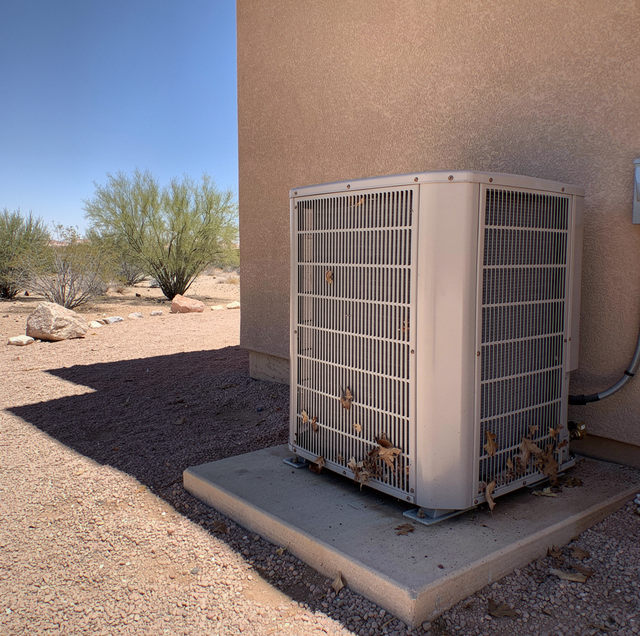
Picking between a heat pump and a straight-cool air conditioner used to be simple in a climate where summer cooling load dwarfs winter heating need: buy the cooling-only system and pair it with a furnace. That logic still holds for plenty of homes, but a heat pump has closed the gap enough that the choice deserves a real second look, especially at replacement time, when the whole system is on the table anyway.
What Separates These Two Systems
A straight-cool air conditioner and a heat pump share the same basic refrigeration circuit: a compressor, an outdoor coil, an indoor coil, and a metering device that manages refrigerant flow between them. The difference comes down to one part. A heat pump adds a reversing valve that can reverse the direction the refrigerant flows through the system, allowing the same equipment to pull heat out of the house in summer and pull heat into the house in winter. A straight-cool system only ever runs one direction, so it needs a separate furnace, electric strip, or other heat source to handle winter.
That single added valve changes more than most homeowners expect. It affects the upfront cost, how the system behaves on the hottest days, what happens during a rare cold snap, and what a technician checks during a maintenance visit.
Efficiency When Outdoor Temperatures Climb
In a hot, dry climate, cooling capacity gets tested for months at a stretch rather than a few scattered weeks, so efficiency under sustained high heat matters more than the efficiency rating on a spec sheet measured at moderate outdoor temperatures. Both a heat pump and a straight-cool system use the same basic cooling cycle, so a well-matched pair rated at the same SEER2 number will cool a home about as efficiently once outdoor temperatures climb into the triple digits. The compressor works the same way in both cases: it compresses refrigerant, rejects heat at the outdoor coil, and cycles that heat outside.
Where a heat pump gives up a small amount of ground is the reversing valve itself. It is one more component the refrigerant has to pass through, and it introduces a slightly more complex refrigerant path than the simpler circuit in a straight-cool unit. In practice, this shows up as a marginal efficiency difference between otherwise identical systems, not a meaningful one, and it rarely changes which system cools a given home better on a 110-degree afternoon. What matters more for either system is correct sizing: an oversized unit of either type short-cycles, cools the air without removing enough moisture, and wears out its components faster, regardless of which refrigeration path it uses.
Heating Capability: Where The Two Systems Actually Diverge
This is the factor that decides most of these comparisons. A straight-cool system produces no heat on its own; it needs a gas furnace, electric furnace, or heat strip to keep a home warm once temperatures drop. A heat pump produces heat directly, by reversing the same refrigeration cycle that cools the house in summer, and it does this without burning fuel.
Heat pumps lose heating capacity as outdoor temperatures fall, because there is simply less ambient heat outside for the system to extract and move indoors. In a mild winter climate where overnight lows rarely drop into the twenties, a properly sized heat pump can usually carry the full heating load on its own. Most heat pump installations still include a small electric heat strip as backup, not because it is needed every winter, but because it covers the occasional hard freeze without leaving the home cold while a technician is called. That backup strip runs on electric resistance heat rather than the heat pump's own refrigeration cycle, so it is less efficient than the heat pump itself and is meant for occasional use, not routine heating.
If your winters are mild and short, a heat pump can often replace both the AC and the furnace with a single outdoor unit, which is a main appeal for many homeowners weighing the two. If winter heating load is heavier or temperatures regularly dip well below freezing for extended stretches, a furnace paired with a straight-cool system stays the more efficient way to produce that heat, since combustion or resistance heating from a properly sized furnace doesn't lose capacity the way a heat pump does as it gets colder outside.
Maintenance: Mostly The Same, With One Extra Component
Both systems need the same core maintenance: coil cleaning, refrigerant charge checks, condensate drain clearing, and filter changes on whatever cadence your household generates dust. Windblown dust and grit pack into an outdoor coil's fins on either system, restricting the airflow the compressor needs to reject heat, and a hard water supply can scale an indoor evaporator coil and clog a condensate line the same way on both.
A heat pump adds two things to that maintenance list. The reversing valve itself is a mechanical component that can stick or fail over years of switching directions twice a day during shoulder seasons, and a heat pump also runs a periodic defrost cycle in heating mode that a straight-cool system never needs, since a straight-cool unit's outdoor coil never operates cold enough in winter to frost over in the first place. Neither of these becomes a frequent repair item, but a technician servicing a heat pump checks a couple of things that a straight-cool system simply doesn't have.
Lifespan and Long-Term Wear
Component-for-component, a heat pump and a straight-cool system are built from largely the same parts and tend to land in a similar service-life range when properly sized and maintained. The meaningful difference is run hours. A heat pump used for both cooling and heating logs cycles across nearly the entire year rather than a compressor that rests all winter, and more annual run hours on the compressor and reversing valve can mean the equipment accumulates wear faster over a given number of calendar years than a straight-cool compressor that only works during cooling season. That does not automatically mean a shorter service life; a furnace paired with a straight-cool system has its own wear pattern, including the heat exchanger and ignition components, which fail on their own schedule. It does mean a heat pump's compressor is doing more total work over the life of the system, which is worth weighing against the convenience of having one outdoor unit instead of two heating and cooling sources.
Heat Pump vs Straight-Cool AC: Side-by-Side Comparison
| Factor | Heat Pump | Straight-Cool AC |
|---|---|---|
| Upfront cost tier | Higher, from the added reversing valve and controls | Lower, simpler refrigeration circuit |
| Efficiency in extreme heat | Comparable cooling performance to a matched straight-cool unit, with a small efficiency trade-off from the reversing valve | No reversing-valve penalty; built solely to cool |
| Heating capability | Produces heat directly by reversing the cooling cycle; capacity drops as it gets colder outside | None on its own; needs a paired furnace or heat strip |
| Maintenance | Same coil, filter, and refrigerant tasks, plus a reversing valve and periodic defrost cycle to monitor | Same coil, filter, and refrigerant tasks; fewer moving parts |
| Lifespan factors | Compressor and valve log cycles nearly year-round | Compressor rests during the heating season |
Which One Actually Fits Your Situation
A heat pump tends to make the most sense for a home with mild, short winters where the heating load is light enough that a heat pump can carry most or all of it, for anyone who wants a single outdoor unit instead of separate cooling and heating equipment, or for a household replacing an aging furnace at the same time as the AC, since a heat pump lets that replacement happen in one step. A straight-cool system paired with a furnace still makes sense where winter heating needs are heavier, where an existing furnace still has plenty of service life left and doesn't need replacing yet, or for anyone who wants simpler, lower-cost equipment on the cooling side and isn't looking to consolidate systems.
Neither option is a clear universal winner. The right call depends on how much of the year each system spends heating versus cooling in your specific home, the condition of your existing furnace, if you have one, and how much you value having a single piece of outdoor equipment handle both jobs instead of two. A load calculation that accounts for both your cooling and heating needs, rather than sizing off the old equipment's tonnage, is worth having done before committing to either path.
Frequently Asked Questions
Yes, in most cases, but not entirely on its own once temperatures drop far enough. Every heat pump has a "balance point," the outdoor temperature below which it can no longer pull in enough ambient heat to meet the home's full heating demand by itself. Below that point, the backup electric heat strip kicks in automatically to cover the shortfall. That balance point typically falls somewhere in the mid-20s to low-30s Fahrenheit, depending on the specific equipment, which is well below what a hot, dry climate sees on all but the rarest overnight freeze.
Yes. A heat pump uses a thermostat that controls both the compressor and the backup heat strip separately, since running the strip unnecessarily wastes electricity. Many heat pump thermostats include an "aux heat" indicator that lights up specifically when the backup strip engages, which is a useful diagnostic: if that light stays on constantly rather than only during a hard freeze, it usually signals the heat pump itself isn't keeping up and needs a service call.
The reversing valve is a solenoid-controlled valve that redirects refrigerant flow through the system's coils. In cooling mode, refrigerant flows one direction so the indoor coil absorbs heat from the house and the outdoor coil releases it outside. Energizing the valve's solenoid shifts a slide inside the valve, reversing the flow so the outdoor coil absorbs heat from the outside air and the indoor coil releases it into the house. It's a purely mechanical switch, and it's the one part that has no equivalent in a straight-cool system.
That's the defrost cycle, and it's normal. When a heat pump runs in heating mode, its outdoor coil gets colder than the surrounding air and can accumulate frost, much like a freezer builds up ice over time. Periodically, the system briefly reverts to cooling mode for a few minutes to melt the frost off the outdoor coil, and the steam you see is the built-up frost evaporating as warm refrigerant passes through. A straight-cool system never does this because its outdoor coil never gets cold enough to frost over.
Sometimes, but it depends on the indoor coil and the line set, not just the outdoor unit. A heat pump conversion typically requires an indoor coil rated for heat pump operation and a metering device that can handle refrigerant flow in both directions, so simply swapping the outdoor condenser for a heat pump unit while leaving an old straight-cool indoor coil in place usually isn't a supported combination. Most conversions end up replacing the indoor coil along with the outdoor unit, which is worth factoring into the cost comparison before assuming a conversion is the cheaper path.
Often, yes. A heat pump's backup electric heat strip draws considerably more current than the compressor alone, so homes switching from a gas furnace to a heat pump with electric backup sometimes need a larger dedicated circuit or a panel with enough spare capacity to support it. This is worth checking during a load calculation rather than after installation, since an undersized circuit for the heat strip can trip a breaker on the coldest nights, exactly when the backup heat is needed most.
Schedule a heat pump vs. AC consultation — get a heat-load calculation and a straight answer on which system fits your home before you buy. Modern Air Conditioning & Heating LLC serves Boulder City, Las Vegas, and Henderson. NV C-21 #0081442. Call (702) 919-4365.
