
How Often Should an AC Be Serviced in a Hot Desert Climate?
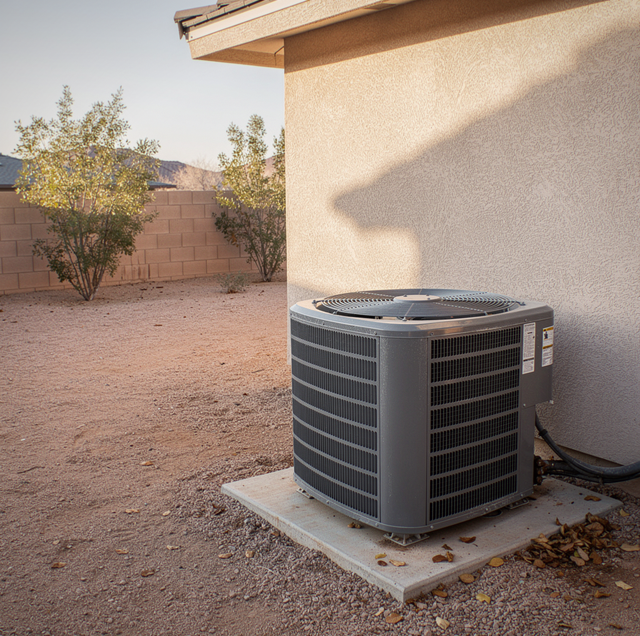
An air conditioner built for a mild climate might run in short bursts, cycling on for ten minutes and resting for twenty. A system working through a hot desert climate doesn't get that rest. Once outdoor temperatures push past the point at which the house loses heat faster than the equipment can remove it, the compressor settles into long, nearly continuous runs that can stretch for months at a time. That single difference in duty cycle changes how often service actually needs to occur and which components fail first.
Why Extreme Heat Changes The Math On Service Intervals
Most manufacturer guidance assumes a cooling season that runs a handful of months with plenty of mild days mixed in. A hot desert climate compresses that pattern: the temperature swing between a comfortable morning and a punishing afternoon is wide, and the stretch of days hot enough to keep the compressor working nearly around the clock is long. A system logging that kind of run time in one summer can rack up more operating hours than a similar unit in a milder climate sees in two or three years.
Hours matter more than the calendar here. Every moving part in a cooling system- motor bearings, capacitor plates, coil surfaces- has a wear curve tied to how long and how hard it runs, not to how many birthdays it has had. A once-a-year service interval written for a temperate climate doesn't account for a compressor that's already logged the equivalent of an extra season or two of runtime before autumn even arrives. That's the reason a heavy-use pattern like this calls for a shorter interval than the generic advice printed in an owner's manual.
What Near-Continuous Run Time Does To A Compressor
The compressor is the hardest-working part of the system and the most expensive to replace. Every time it starts, it draws a heavy current surge, called inrush, that stresses the motor windings and the electrical components that support it. A system that only starts a handful of times a day sees a handful of those stress events. A system running almost continuously through a stretch of extreme heat cycles less often, but it runs long enough at a stretch that internal temperatures inside the compressor shell climb higher than they would during shorter runs.
Heat is the enemy of motor insulation and bearing lubrication. A compressor running hot for extended periods breaks down its internal lubricant faster and pushes winding insulation toward the point where it can short out. None of this shows up as a dramatic failure on day one. It shows up as a compressor that runs louder, strains a little on startup, or draws slightly more current than it used to, months or years before it actually quits. Regular service is what catches those early signs while a repair is still possible, rather than after the compressor has already failed on the hottest day of the year.
Capacitors, Coils, And Filters Under Heavy Load
The compressor doesn't work alone, and the parts that support it wear out on the same accelerated timeline.
Capacitors give the compressor and fan motors the jolt of current they need to start, and they help the motors run smoothly once they're running. A capacitor is rated to hold a specific electrical charge, and that rating drifts downward with heat and age. In a system starting up under near-continuous demand, a weakening capacitor forces the compressor to strain through every start, which shortens both the capacitor's life and the compressor's. A capacitor that tests within range in spring can drift out of spec by the time the hottest stretch of the year arrives, which is exactly why a mid-season check matters as much as the pre-season one.
Coils are where the actual heat exchange happens, and both the outdoor condenser coil and the indoor evaporator coil lose efficiency when their surfaces get fouled. Dust and windblown grit pack into the condenser coil's fins, insulating it and blocking the airflow it needs to reject heat outdoors. Hard water can leave mineral scale on the indoor evaporator coil and inside the condensate line, which slows drainage and can trip a safety switch or cause water damage. A dirty coil makes the whole system work harder to move the same amount of heat, and that extra strain lands right back on the compressor.
Filters clog faster in dusty climates than manufacturers' packaging usually assumes. A clogged filter restricts airflow, and restricted airflow causes the evaporator coil to run colder than it should, which risks icing it over. Ice on the coil blocks airflow entirely and can send liquid refrigerant back toward the compressor, which can damage it outright. A filter that would be fine for eight or ten weeks in a milder climate may need swapping closer to every four to six weeks during the heaviest run months, depending on the home and the filter type.
What A Maintenance Visit Actually Checks
A maintenance visit is built around the parts that drift out of spec under load, not a generic wipe-down of the unit. A technician measures refrigerant pressures against the temperatures at the coil, since a system running low on charge loses cooling capacity and forces the compressor to work outside its intended range. The condenser and evaporator coils are cleaned so heat transfer is restored rather than trapped under a layer of buildup. Capacitors get tested against their rated value and replaced if they've drifted, and the contactor, the switch that sends power to the outdoor unit, gets checked for pitting that causes hard starts or failure to start at all.
The visit also covers the condensate drain line, since algae and mineral buildup can block it over a season of heavy moisture removal, and the filter, blower motor, and blower wheel, since a dirty blower wheel unbalances the fan and chokes airflow just as much as a clogged filter does. A technician measures the temperature split between the return air and the supply air, a fast check that flags a charge problem or an airflow restriction before it becomes a bigger fault. Wiring is inspected for heat damage caused by loose connections over a season of hard running, and the thermostat is checked for accuracy, since a reading off by even a couple of degrees can make the whole system run to the wrong target.
How Often Service Should Happen Given This Use Pattern
For a system carrying this kind of heavy seasonal load, twice-a-year service holds up better than the once-a-year interval that works fine in milder climates. One visit belongs in spring, before the heaviest run months begin, to catch anything that drifted over the winter and confirm the system is ready for months of near-continuous operation. A second visit later in the season, once the system has logged real hours under real heat, catches the parts that only show wear after sustained running: a capacitor that's drifted since spring, a coil that's fouled again from a dust event, a drain line that's started to slow.
This isn't a one-time adjustment tied to an unusually hot summer. A hot desert climate produces this pattern every year, so the twice-a-year interval is the ongoing baseline rather than an exception. Systems that also provide heating benefit from a matching check on that side, since the same components sit through the shoulder seasons even when they're not under summer load. Skipping a cycle doesn't reset the wear that's already happened; it just means the next visit finds more of it stacked up.
Warning Signs A System Is Overdue For Service
Some signs are worth acting on before the next scheduled visit arrives. A system that runs longer cycles than it used to, or that never seems to fully satisfy the thermostat on the hottest afternoons, is often losing refrigerant charge or fighting a fouled coil. A compressor that hums, strains, or takes a beat longer to start than it used to is showing early signs of a weak capacitor or a pitted contactor. Warm air from the vents, weak airflow at the registers, or ice visible on the indoor coil or the refrigerant lines all point toward a problem that's already affecting comfort, not just efficiency.
A rising utility bill with no change in habits is one of the quieter signs, since a system losing efficiency to a dirty coil or a low charge draws more power to produce the same result. Water pooling near the indoor unit, or a system that shuts off unexpectedly, usually means the condensate drain has backed up and tripped a safety switch. Any of these signs, on their own, is a reason to call for service rather than wait for the next routine visit, since a heavy-use system that's already showing strain is closer to a failure than the same signs would suggest on a lightly used one.
Frequently Asked Questions
Yes. A newer system with a higher efficiency rating still relies on the same capacitors, coils, and refrigerant charge, and those parts wear on the same schedule once the equipment is logging heavy run hours. Efficiency ratings describe how the system performs when everything is within spec, not how long the parts stay within spec under sustained heat.
A smart thermostat can reduce unnecessary run time by adjusting the schedule automatically, which helps a little, but it doesn't change the wear that happens during the hours the system does run. Thermostat scheduling and mechanical service address two different problems, and neither substitutes for the other.
Yes, that's expected behavior when outdoor temperatures stay high for extended stretches, since the system is constantly working to offset heat gain. The concern isn't that it runs long; it's whether it's running long because that's simply what the conditions demand, or because a fouled coil or low charge is forcing it to work harder than it should.
Running the blower fan continuously improves air mixing and can even out temperatures between rooms, but it adds hours to the blower motor and pulls more particulate through the filter over time. A home running the fan setting continuously often benefits from a shorter filter-change interval to match the added runtime.
The service checklist is the same, but a two-story home often runs its system harder on the upper level, where heat gain is greater, which can mean uneven wear between zones if the home uses a zoned system. A technician checking airflow balance across levels can catch a struggling zone before it turns into a comfort complaint.
Skipping routine visits doesn't stop the wear from happening; it just means problems get found later, usually after they've already affected another part. A capacitor that would have been caught and replaced during a routine visit can instead take a compressor down with it, turning a minor fix into a major one.
Schedule seasonal AC service before peak cooling demand hits — protect the compressor, coils, and capacitors from months of heavy use. Modern Air Conditioning & Heating LLC serves Boulder City, Las Vegas, and Henderson. NV C-21 #0081442. Call (702) 919-4365.
